
 Call
Call
 Inquire
 Meet MSL
 Search
Epidemiology and Ending the HIV Epidemic
HIV remains a public health issue, with over 39,000 new HIV diagnoses among individuals aged 13 years and older in 2023 within the United States and 6 territories and freely associated states.1
Understanding the epidemiology of HIV is critical to identifying populations with a higher likelihood of HIV acquisition and tailoring prevention efforts.2 Explore current data on HIV prevalence and diagnoses across key demographic subgroups.
Rates of Persons Aged ≥13 Years Living with Diagnosed HIV, Year-End 20231

| American Samoa | 2.9 |
| Guam | 92.3 |
| Northern Mariana Islands | 45.7 |
| Puerto Rico | 534.5 |
| Republic of Palau | 53.9 |
| U.S. Virgin Islands | 635.9 |
Note: Prevalence data should be interpreted with caution due to use of preliminary death data for the year 2023 reported to CDC as of December 2024.
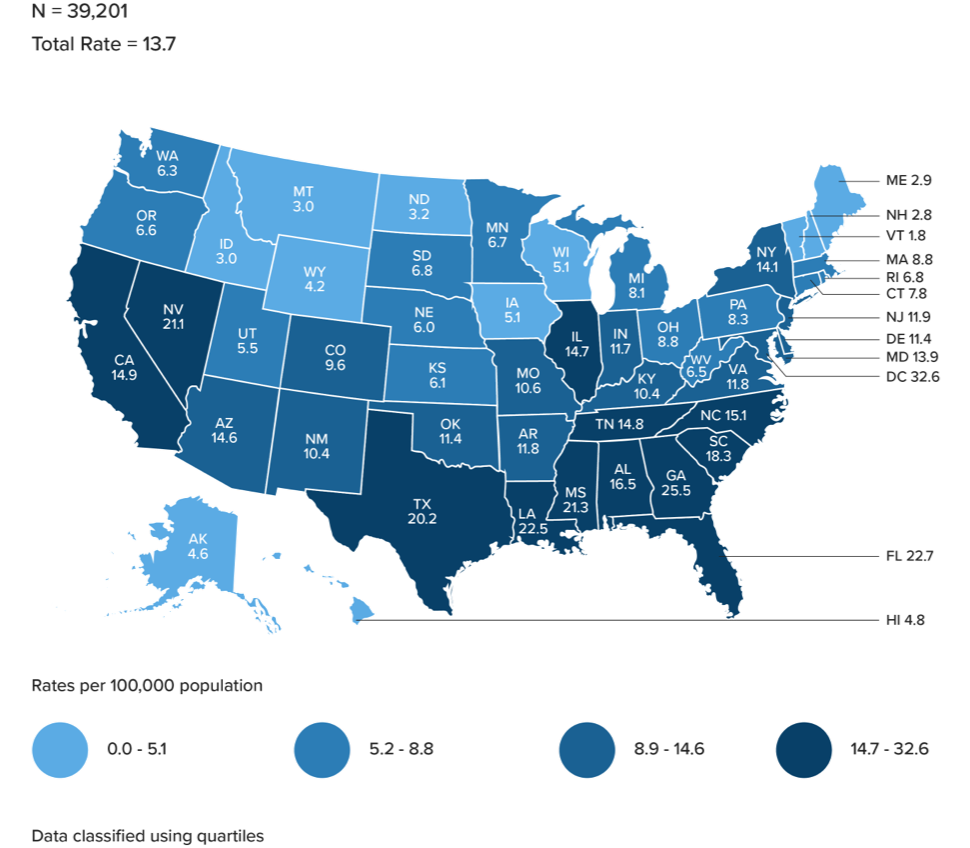
| American Samoa | 0.0 |
| Guam | 3.1 |
| Northern Mariana Islands | 4.8 |
| Puerto Rico | 13.5 |
| Republic of Palau | 0.0 |
| U.S. Virgin Islands | 14.8 |
HIV Rates by County
Top 5 Counties with Highest Rates of People Living with HIV, 20233
| COUNTY | STATE | RATES/100,000 |
|---|---|---|
| Borden | Texas | 3035 |
| Bronx | New York | 2438 |
| Stewart | Georgia | 2381 |
| District of Columbia | Washington, DC | 2286 |
| Baltimore City | Maryland | 2225 |
Top 5 Counties with Highest Rates of New HIV Diagnoses, 20233
| COUNTY | STATE | RATES/100,000 |
|---|---|---|
| Stewart | Georgia | 212 |
| Frio | Texas | 168 |
| Jones | Texas | 100 |
| Claiborne | Mississippi | 96 |
| Butts | Georgia | 91 |
AIDSVu.org was developed by the Rollins School of Public Health at Emory University in partnership with Gilead Sciences, Inc.
Estimates of New HIV Diagnoses in the United States by Subgroup
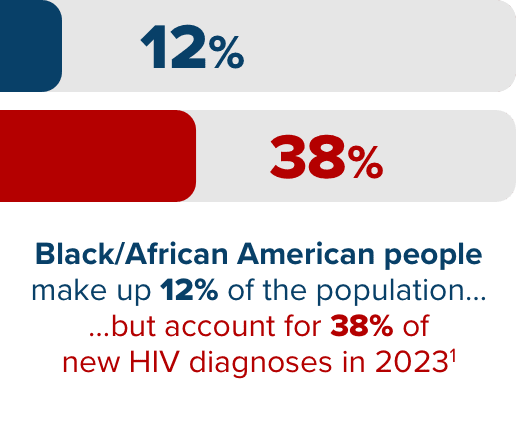
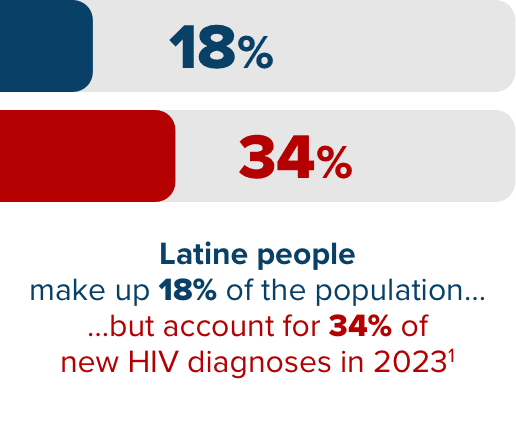
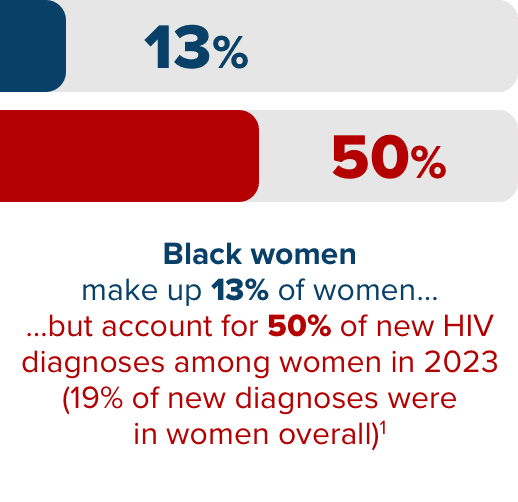
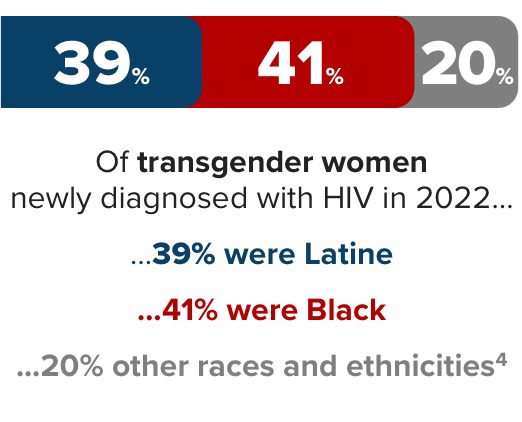
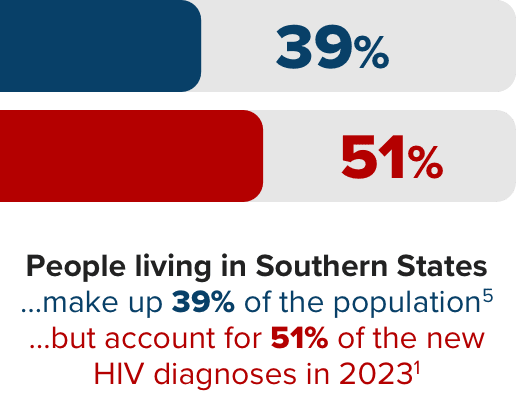
Black/African American people, Latine people, transgender people, and people living in the Southern United States are disproportionately impacted by HIV. These disparities highlight the ongoing need for prioritizied screening, prevention, and care strategies.1,4-6
Race, Ethnicity, Sex, and Gender
Region
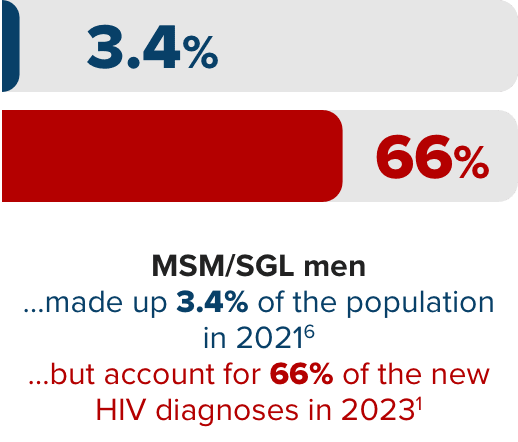
Sexual Orientation
Age
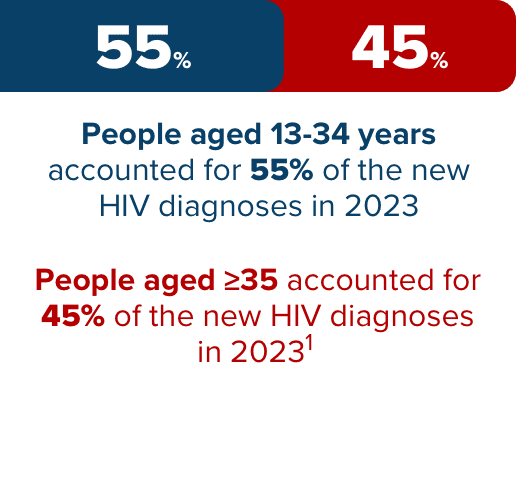
Note: HIV diagnoses are among persons aged ≥13 years per the CDC. Latine people can be of any race.1
Ending the HIV Epidemic
The federal Ending the HIV Epidemic initiative, which seeks to reduce new HIV diagnoses by 75% in 2025 and 90% by 2030, centers on 4 key strategies: diagnose, treat, prevent, and respond.7 PrEP plays a critical role in achieving this target by helping to prevent new transmissions through sex before they occur.8


PrEP Coverage is one of the 6 Ending the Epidemic indicators, and reflects the number of individuals who have been prescribed PrEP divided by the estimated number of individuals with indications for PrEP. While PrEP use has increased over time, the 2025 goal for 50% PrEP coverage is not on track to be met. There continues to be inequalities in PrEP use.9,10
Estimated PrEP Coverage in the United States by Race or Ethnicity, 20229,10
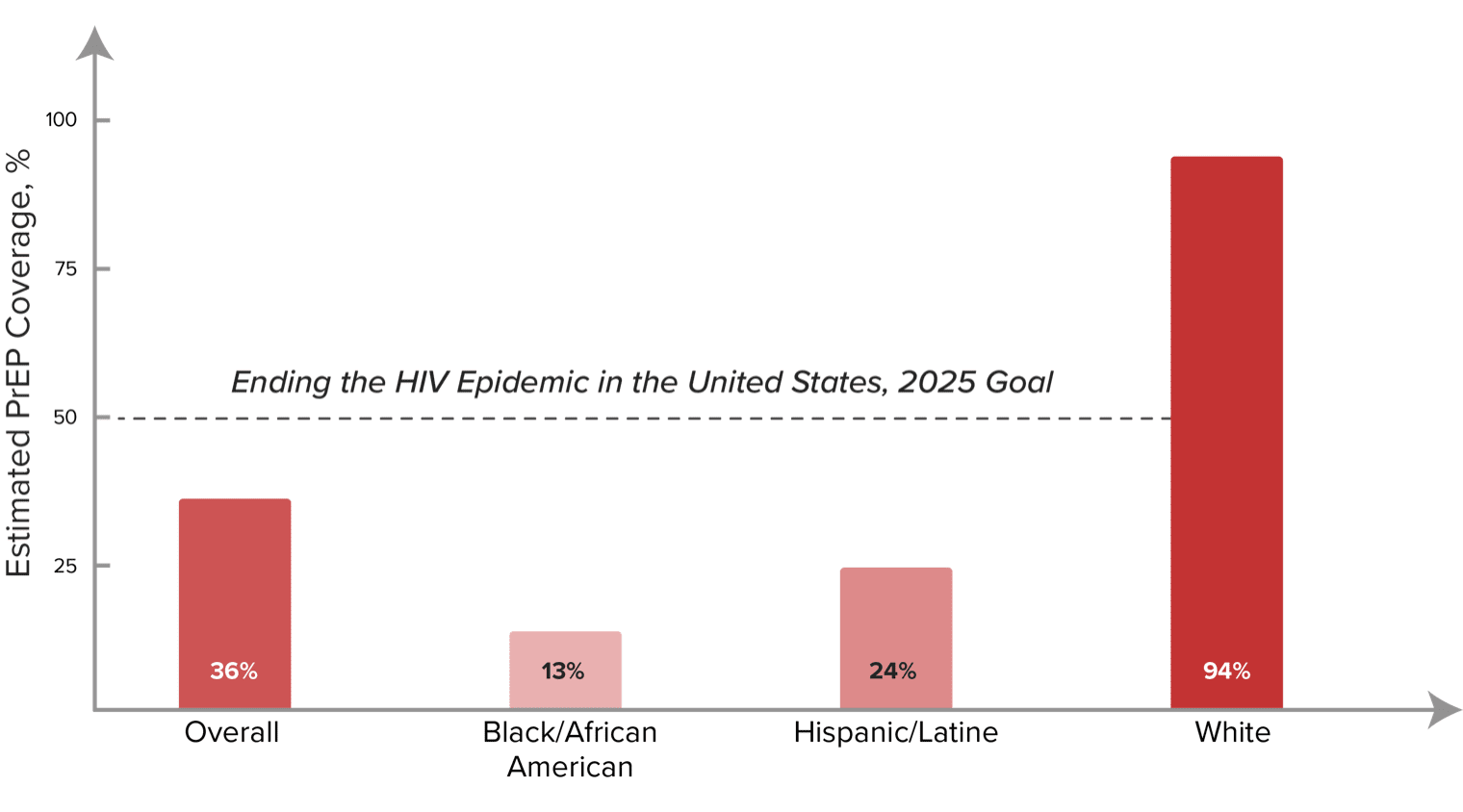
Data are preliminary per the CDC.

Without intervention, another 400,000 Americans will be newly diagnosed with HIV over 10 years despite the available tools that can help prevent HIV, like PrEP7
PrEP Uptake in the United States
Approximately 2.2 million individuals in the US were estimated in 2023 to be in need of PrEP.11 Black and Hispanic/Latine individuals have disproportionately higher rates of HIV and also are prescribed PrEP at lower rates compared to White individuals.12
PnR by Race Over Time, 2012-20243
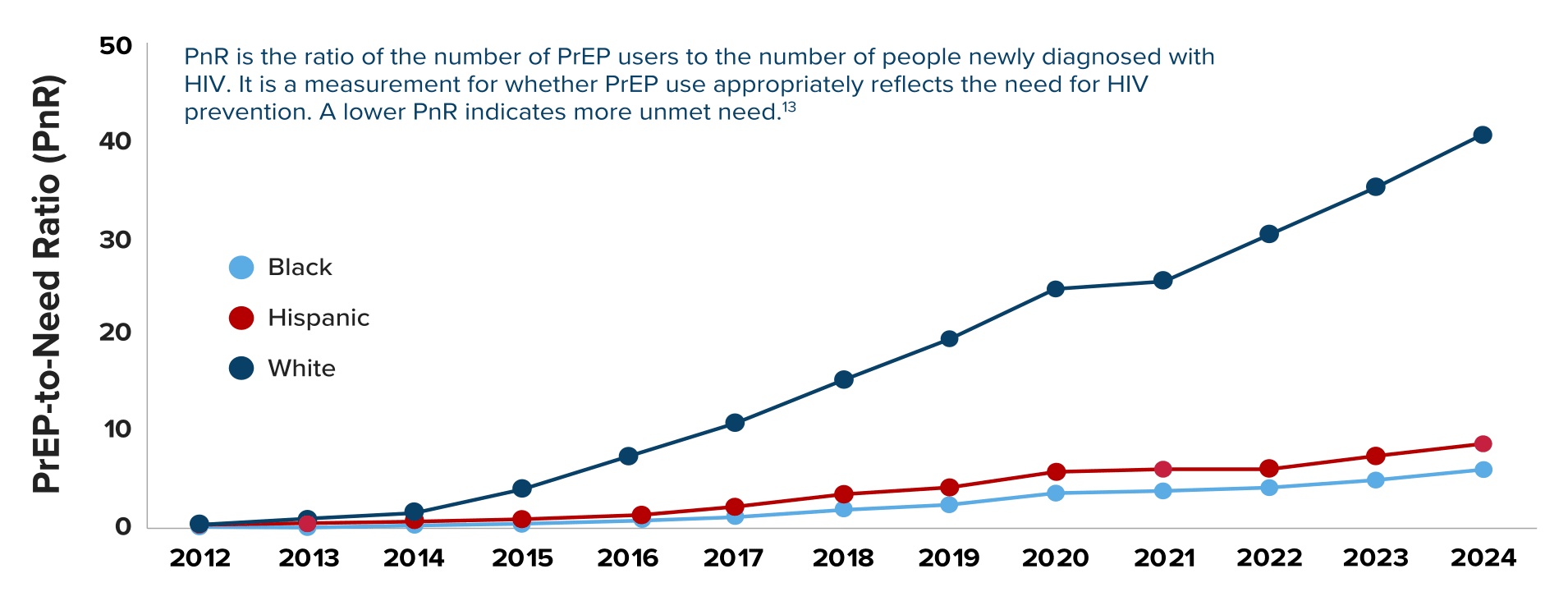
AIDSVu.org was developed by the Rollins School of Public Health at Emory University in partnership with Gilead Sciences, Inc.
While the rate of PrEP use has increased consistently across all races and ethnicities, with a 17% increase between 2023 and 2024,14 equity in PrEP use by race and ethnicity has decreased over time,13 and only 36% of individuals who may need or want PrEP were prescribed it in 202210
In a cross-sectional pharmacoequity analysis (459,984 PrEP users), inequities in mean number of days covered by dispensed PrEP prescriptions by sex, race/ethnicity, and age group were identified. Black non-Hispanic and Hispanic/Latine people, and young individuals (aged <16 years) had fewer dispensed days of coverage than White non-Hispanic and older individuals (P<0.01).15
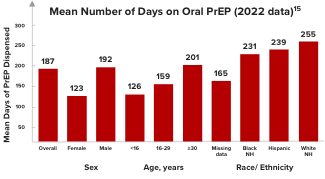
Significant differences in PrEP coverage may indicate low persistence and point to opportunities to address and monitor PrEP equity.15
MSM, men who have sex with men; SGL, same-gender-loving.
References:
- Centers for Disease Control and Prevention. HIV diagnoses, deaths, and prevalence: 2025 update. Updated April 29, 2025. Accessed October 1, 2025. https://www.cdc.gov/hiv-data/nhss/hiv-diagnoses-deaths-and-prevalence-2025.html
- Silhol R, Anderson RL, Stevens O, et al. Measuring HIV acquisitions among partners of key populations: estimates from HIV transmission dynamic models. J Acquir Immune Defic Syndr. 2024;95(1S):e59-e69. doi:10.1097/QAI.0000000000003334
- AIDSVu. Tools & resources. Accessed September 5, 2025. https://aidsvu.org/resources/#/datasets
- Centers for Disease Control and Prevention. HIV surveillance report: diagnoses, deaths, and prevalence of HIV in the United States and 6 territories and freely associated states, 2022. Published May 21, 2024. Accessed September 5, 2025. https://stacks.cdc.gov/view/cdc/156509
- U.S. Census Bureau. United States population growth by region. Accessed September 5, 2025. https://www.census.gov/popclock/data_tables.php?component=growth
- Bennett BW, DuBose S, Huang YA, et al. Population percentage and population size of men who have sex with men in the United States, 2017–2021: meta-analysis of 5 population-based surveys. JMIR Public Health Surveill. 2024;10:e56643. doi:10.2196/56643
- U.S. Department of Health and Human Services. EHE overview. Updated September 18, 2025. Accessed September 30, 2025. https://www.hiv.gov/federal-response/ending-the-hiv-epidemic/overview
- U.S. Department of Health and Human Services. Key EHE strategies. Updated July 15, 2024. Accessed September 5, 2025. https://www.hiv.gov/federal-response/ending-the-hiv-epidemic/key-strategies
- Centers for Disease Control and Prevention. Ending the HIV Epidemic in the US goals. Updated March 20, 2024. Accessed October 1, 2025. https://www.cdc.gov/ehe/php/about/goals.html
- Centers for Disease Control and Prevention. Expanding PrEP coverage in the United States to achieve EHE goals. Published October 17, 2023. Accessed September 18, 2025. https://www.cdc.gov/nchhstp/director-letters/expanding-prep-coverage.html
- Kourtis AP, Wiener J, Zhu W, et al. Estimating the population need for preexposure prophylaxis for HIV in the United States. Ann Epidemiol. 2025;106:48-54. doi:10.1016/j.annepidem.2025.04.017
- AIDSVu. AIDSVu releases 2024 PrEP use data showing growing use across the U.S. Published June 26, 2025. Accessed October 1, 2025. https://aidsvu.org/news-updates/aidsvu-releases-2024-prep-use-data-showing-growing-use-across-the-u-s/
- AIDSVu. PrEP use in black communities. Accessed October 1, 2025. https://aidsvu.org/wp-content/uploads/2024/06/PrEP-Black-Communities-06242024.png
- AIDSVu. Deeper look: PrEP. Accessed September 5, 2025. https://aidsvu.org/resources/deeper-look/prep/
- Sullivan PS, Juhasz M, Le G, Brisco K, Dubose S. Association of state-level PrEP coverage and state-level HIV diagnoses, US, 2012-2021. Poster presented at: Conference on Retroviruses and Opportunistic Infections; March 3-6 2024; Denver, CO.