


Disease Overview and Epidemiology
PBC is a chronic, inflammatory, autoimmune liver disease within the subgroup of chronic cholestatic liver disease, which occurs when genetic and epigenetic risk factors interplay with environmental triggers. PBC can result in end-stage liver disease, with a 10-year survival rate of 77%.1-4
With no cure and an overall US prevalence of 40.9 per 100,000 adults, primary biliary cholangitis (PBC) management goals focus on disease and symptom control.5,6,a
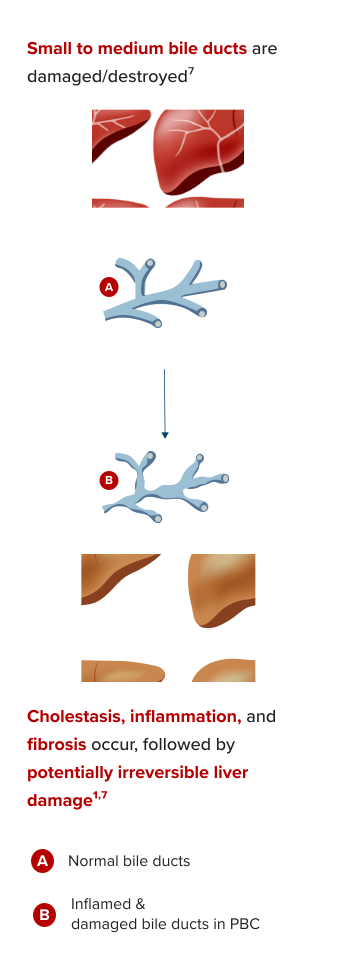
Pathogenesis of PBC
Global Prevalence of PBC Is Highly Variable, With Prevalence Rates Highest in North America8
PBC has been on the rise over the past 50 years in North America, with rapid rise before 2000. Both the incidence and prevalence showed an increasing tendency worldwide, especially in North America, with an incidence rate of 2.75.8 Non-Hispanic White patients are disproportionally diagnosed, with available US data showing increasing prevalence among Black and Asian American patients as well.9
Globally, PBC affects ~15 per 100,000 persons8
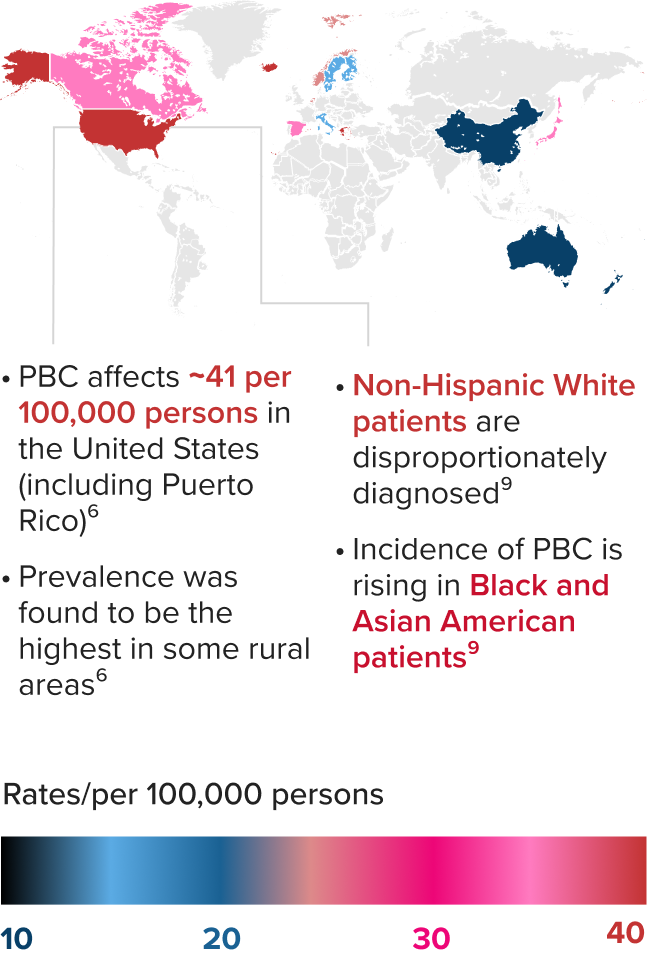

Accurate racial epidemiological estimates are hampered by healthcare disparities and a lack of disease recognition by providers.9
Disparities in PBC
Prevalence Disparities Between Women and Men
While PBC predominantly affects women, its prevalence in men has been increasing over the years.9
PBC in males is often diagnosed at an older age, once the disease is more advanced, and is associated with9:
- Lower biochemical response to 1st line treatment
- Greater progression to cirrhosis
- Higher rates of liver-related death or transplantation
- Increased risk of hepatocellular carcinoma
Female:Male Ratio of PBC Prevalence Over Time9,10
| YEARS | RATIO | |
|---|---|---|
| 1990s–2000s | ~10:1 |

|
| 2000s onward | ~4–6:1 |
Clinical Presentation Disparities Between Racial Groups
In a cross-sectional US study, PBC was evaluated in patients based on clinical presentation, response to therapy, and outcomes between Hispanic and non-Hispanic patients. After a median follow up of 3.7 years, Hispanic patients were significantly more likely to11:
- Have overlap syndrome of PBC and autoimmune hepatitis (P=0.002)11
- Have ascites and variceal bleeding (P=0.03 and P=0.01, respectively)11
- Have a lower biochemical response to treatment (60% in Hispanic patients vs 88% in non-Hispanic patients) (P<0.0001)11
Severity of Liver Disease at Presentation by Racial Group (N=535)12
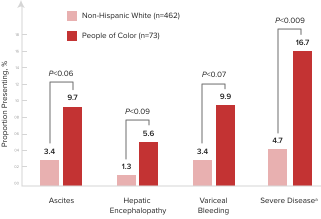
aData comes from a national administrative claims database.6
References:
- European Association for the Study of the Liver. EASL Clinical Practice Guidelines: The diagnosis and management of patients with primary biliary cholangitis. J Hepatol. 2017;67(1):145-172. doi:10.1016/j.jhep.2017.03.022
- Onofrio FQ, Hirschfield GM, Gulamhusein AF. A practical review of primary biliary cholangitis for the gastroenterologist. Gastroenterol Hepatol (NY). 2019;15(3):145-154.
- Lindor KD, Bowlus CL, Boyer J, Levy C, Mayo M. Primary Biliary Cholangitis: 2018 Practice Guidance from the American Association for the Study of Liver Diseases. Hepatology. 2019;69(1):394-419. doi:10.1002/hep.30145
- Mayo MJ, Carey E, Smith HT, et al. Impact of pruritus on quality of life and current treatment patterns in patients with primary biliary cholangitis. Dig Dis Sci. 2023;68(3):995-1005. doi:10.1007/s10620-022-07581-x
- The PBC Network. Primary biliary cholangitis (PBC) living with your diagnosis. Accessed December 2, 2025. https://liver.ca/wp-content/uploads/2018/08/EASL_PBC_Patient-Guidelines_ENG.pdf
- Levy C, Buchanan-Peart KA, MacEwan JP, et al. A nationwide study of primary biliary cholangitis prevalence, geographic distribution, and health care providers. Hepatol Commun. 2025;9(5):e0677. doi:10.1097/HC9.0000000000000677
- American Liver Foundation. Primary biliary cholangitis (PBC). Updated June 12, 2025. Accessed December 2, 2025. https://liverfoundation.org/liver-diseases/autoimmune-liver-diseases/primary-biliary-cholangitis-pbc/
- Lv T, Chen S, Li M, Zhang D, Kong Y, Jia J. Regional variation and temporal trend of primary biliary cholangitis epidemiology: A systematic review and meta-analysis. J Gastroenterol Hepatol. 2021;36(6):1423-1434. doi:10.1111/jgh.15329
- Trivella J, John BV, Levy C. Primary biliary cholangitis: Epidemiology, prognosis, and treatment. Hepatol Commun. 2023;7(6):e0179. doi:10.1097/HC9.0000000000000179
- Tanaka A. PBC: no longer a western disease? Clin Liver Dis (Hoboken). 2021;16(6):227-230. doi:10.1002/cld.903
- Levy C, Naik J, Giordano C, et al. Hispanics with primary biliary cirrhosis are more likely to have features of autoimmune hepatitis and reduced response to ursodeoxycholic acid than non-Hispanics. Clin Gastroenterol Hepatol. 2014;12(8):1398-1405. doi:10.1016/j.cgh.2013.12.010
- Peters MG, Di Bisceglie AM, Kowdley KV, et al. Differences between Caucasian, African American, and Hispanic patients with primary biliary cirrhosis in the United States. Hepatology. 2007;46(3):769-775. doi:10.1002/hep.21759